

Candlestick patterns are one of the clearest ways to read price action on a chart. If you swing trade stocks or ETFs over a few days to a few weeks, knowing the popular candlestick patterns in swing trading can help you time entries and exits with more confidence. This guide walks through how candlesticks work, which patterns matter most, and how to put them to use with solid risk management.
Candlestick Basics For New Swing Traders
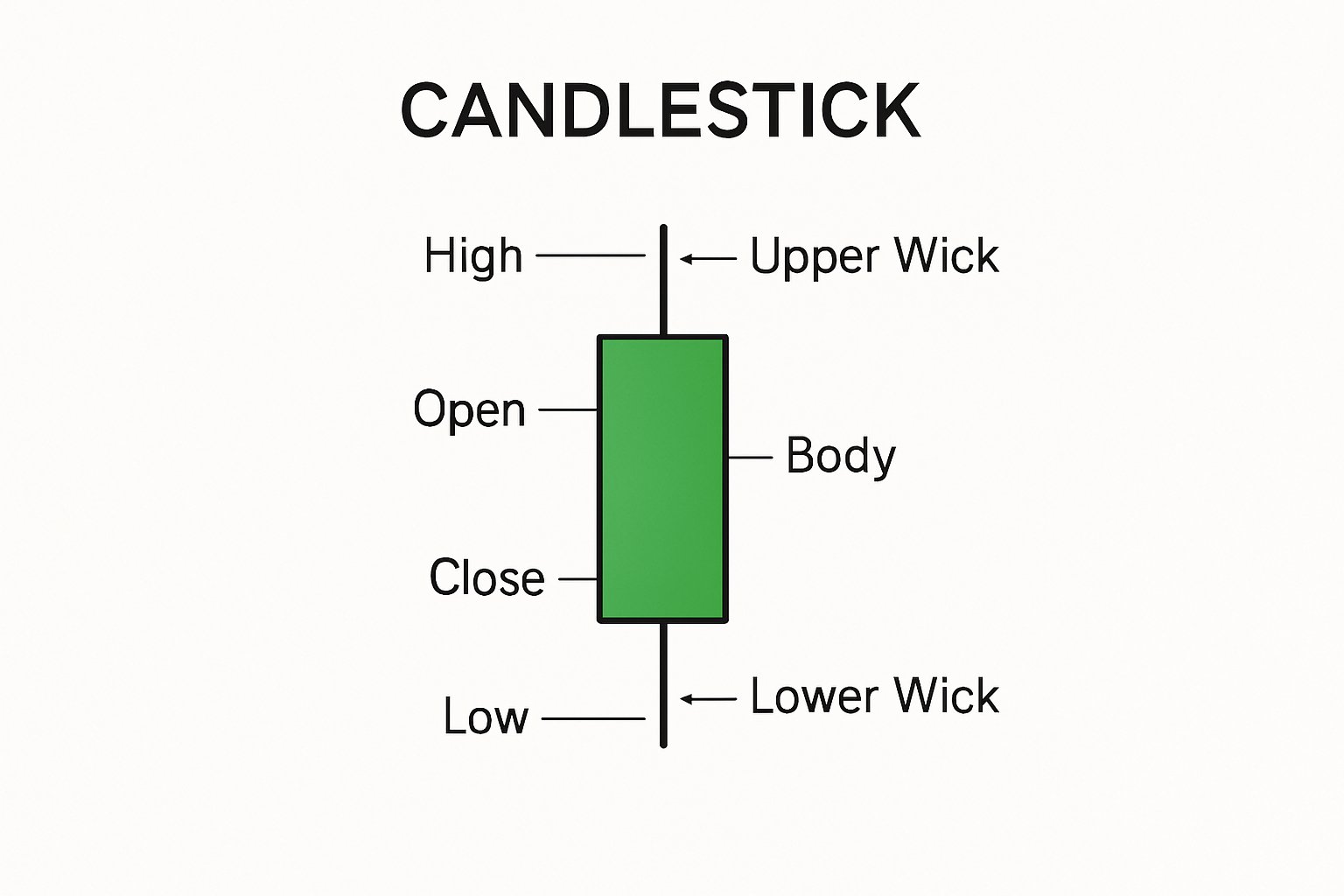
A candlestick chart shows how a stock, ETF, or index traded during a specific period (for example, 1 day or 4 hours). Each candle captures four prices:
- Open – where price started during that period
- Close – where price finished
- High – the highest traded price
- Low – the lowest traded price
The color of the candle tells you who was in control:
- A green (or white) candle means price closed above the open (bullish).
- A red (or black) candle means price closed below the open (bearish).
A candlestick has three parts:
- Body – the thick portion between the open and close
- Upper shadow (wick) – the line from the top of the body to the high
- Lower shadow (wick) – the line from the bottom of the body to the low
Over many candles, price action forms patterns that reflect crowd psychology: fear, greed, exhaustion, and indecision. Swing traders use these popular candlestick patterns in swing trading to spot short‑ to medium‑term reversals or trend continuations.
As price action traders like to say, “The chart tells the story long before the news does.”
If you’re still deciding whether you prefer shorter-term trading or longer-term wealth building, see Trading vs Investing.
Why Popular Candlestick Patterns Matter In Swing Trading
Swing trading focuses on catching swings in price that last from a few days to a few weeks. Candlestick patterns help because they:
- Reveal reversal points where a trend may be ending
- Highlight continuation setups where a trend is likely to resume after a pause
- Provide early clues before indicators like moving averages react
- Offer precise levels for entries, stops, and profit targets
However, candlesticks are not magic signals — research exploring Are candlestick trading strategies effective suggests their reliability depends heavily on context and conditions:
- Trend: Patterns that align with the broader trend (daily, weekly) tend to work better.
- Location: A reversal pattern at major support or resistance is far more meaningful.
- Volume: Strong volume on the signal candle adds conviction.
- Pattern quality: Clear, textbook patterns usually work better than messy ones.
Think of candlesticks as the “language” of price. You still need context—trend, support/resistance, and volume—to understand what that language is saying.
A common saying among traders is, “Price is the final verdict; indicators are just opinions.”
Types Of Candlestick Signals Swing Traders Watch
Most popular candlestick patterns in swing trading fall into three groups:
- Bullish reversal patterns
- Appear after a decline
- Hint that buyers are stepping in and a new upswing may begin
- Bearish reversal patterns
- Show up after a rally
- Suggest that sellers are taking over and a pullback or downtrend may start
- Continuation and indecision patterns
- Indicate a pause, consolidation, or tug‑of‑war between buyers and sellers
- Often appear in the middle of trends
Let’s look at the most useful patterns in each group and how a swing trader might act on them.

Popular Bullish Candlestick Patterns For Swing Trading
These bullish candlestick patterns show buying pressure coming back after a decline and are widely watched by swing traders.
Hammer
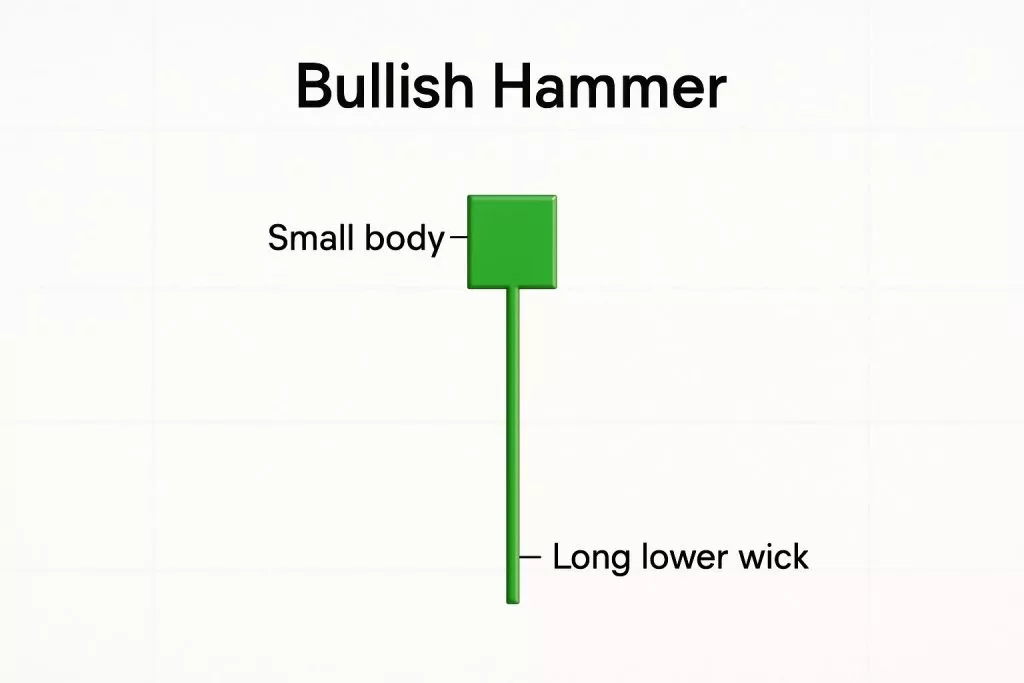
A Hammer appears after a down move and often signals a potential bullish reversal.
What it looks like:
- Small body near the top of the candle’s range
- Long lower shadow at least twice the size of the body
- Little or no upper shadow
What it says about psychology:
Sellers pushed price sharply lower, but buyers came in aggressively and forced price back near the open by the close. That intraperiod reversal can mark the end of seller control.
How swing traders use it:
- Look for Hammers at or near support zones or previous swing lows.
- Many traders wait for a bullish close on the next candle before buying.
- A common stop-loss level is below the Hammer’s low.
Inverted Hammer
The Inverted Hammer is also a bullish reversal pattern found after a decline, but it has the long shadow on top.
Characteristics:
- Small body near the bottom of the range
- Long upper shadow at least twice the body
- Little or no lower shadow
It shows that buyers pushed price higher during the session, but sellers nudged it back down. Even though the close is not very strong, the aggressive move up suggests sellers may be running out of energy.
Swing traders usually want strong confirmation—such as a wide green candle closing above the Inverted Hammer’s high—before entering long.
Bullish Engulfing
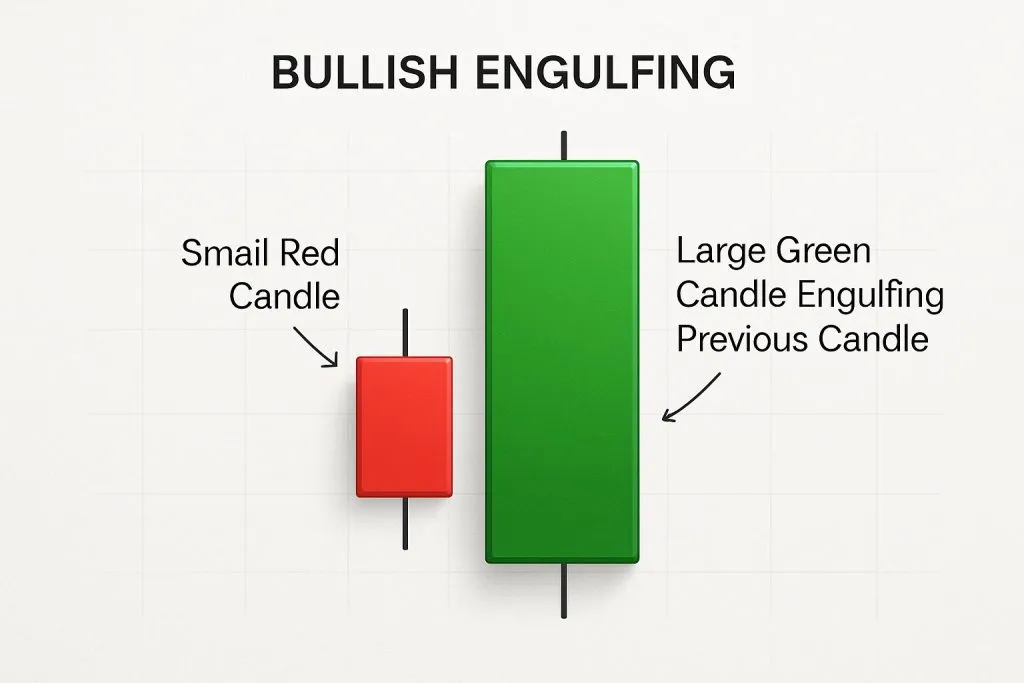
A Bullish Engulfing pattern is one of the most watched candlestick patterns for swing trading when spotting potential bottoms.
Structure:
- Day 1: A small red candle
- Day 2: A larger green candle that fully covers (engulfs) Day 1’s body
What it implies:
Bears were in control on Day 1. On Day 2, bulls pushed price much lower at the open but then completely reversed the move, overwhelming sellers and closing above Day 1’s open.
Trading idea:
- Look for this pattern after a series of lower lows.
- Some traders buy near the close of the engulfing candle or on the next day’s slight dip.
- A common stop is below the engulfing candle’s low.
Piercing Line
The Piercing Line is a two-candle bullish pattern that appears after a decline.
Pattern details:
- First candle: Long red body, continuing the downtrend
- Second candle: Green body that opens below the prior close but finishes above the midpoint of the red candle
The strong intraday rebound on the second candle shows that buyers absorbed the selling and took control.
Many traders wait for a third bullish candle or a close above short-term resistance before entering.
Morning Star
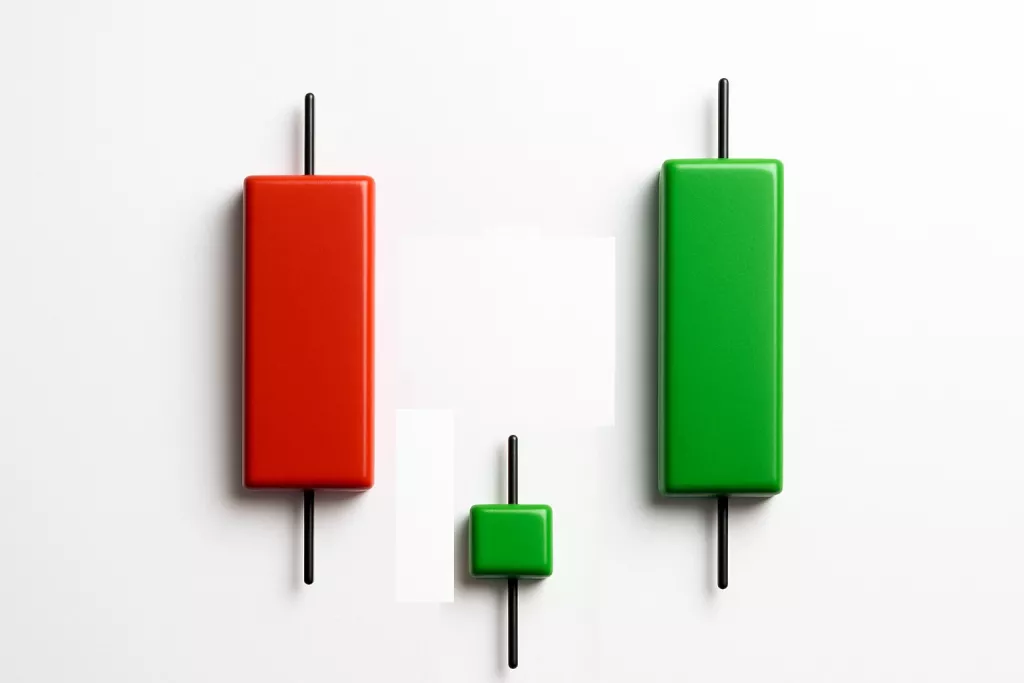
The Morning Star is a powerful three-candle bullish reversal pattern.
Structure:
- Long red candle extending the downtrend
- Small body candle (can be green, red, or a Doji) that gaps down – the “star”
- Long green candle that closes well into the body of the first candle
Reading the message:
- Day 1: Bears firmly in control
- Day 2: Market uncertainty — selling pressure slows
- Day 3: Strong buying interest, often beginning a new upswing
Swing traders often treat the break above the star’s high or above short-term resistance as the actual entry trigger.
Three White Soldiers
The Three White Soldiers pattern signals steady, persistent buying after a decline.
Features:
- Three consecutive green candles
- Each opens near the prior close and closes higher than the previous candle
- Shadows are small, showing consistent buying pressure
This pattern often kicks off a new swing uptrend. Many traders look to buy small pullbacks after the third candle rather than chasing the immediate move.
Check out 10 Best Stocks to Buy Under Rs 100 in India
Popular Bearish Candlestick Patterns For Swing Trading
These bearish candlestick patterns appear after rallies and warn that sellers may be taking over. They are central among the popular candlestick patterns in swing trading for timing exits or short setups.
Hanging Man
The Hanging Man is the bearish counterpart of the Hammer, but it forms after an uptrend.
Appearance:
- Small body near the top of the range
- Long lower shadow at least twice the body
- Little or no upper shadow
It shows heavy intraperiod selling that bulls barely managed to absorb. In an extended uptrend, that can signal that demand is weakening.
Shooting Star
A Shooting Star marks potential exhaustion near the top of an advance.
Characteristics:
- Small body near the low of the range
- Long upper shadow at least twice the body
- Very small or no lower shadow
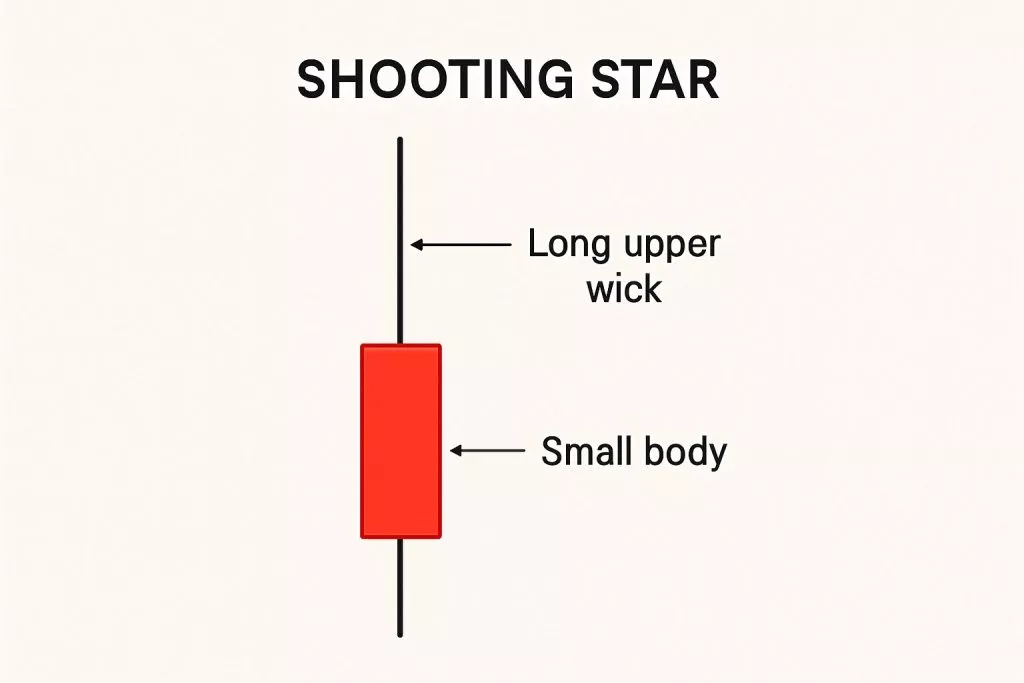
What it reveals:
Price gapped up or moved higher, but sellers pushed it back down near the open. That failed attempt to hold the highs hints that the rally may be running out of steam.
Swing traders often:
- Watch for Shooting Stars near major resistance or prior highs
- Consider partial profit-taking or tightening stops
- Treat a close below the Shooting Star low as a stronger sell signal
Bearish Engulfing
A Bearish Engulfing pattern is a strong warning sign near the top of an upswing.
Setup:
- Day 1: Small green candle
- Day 2: Large red candle that fully engulfs Day 1’s body
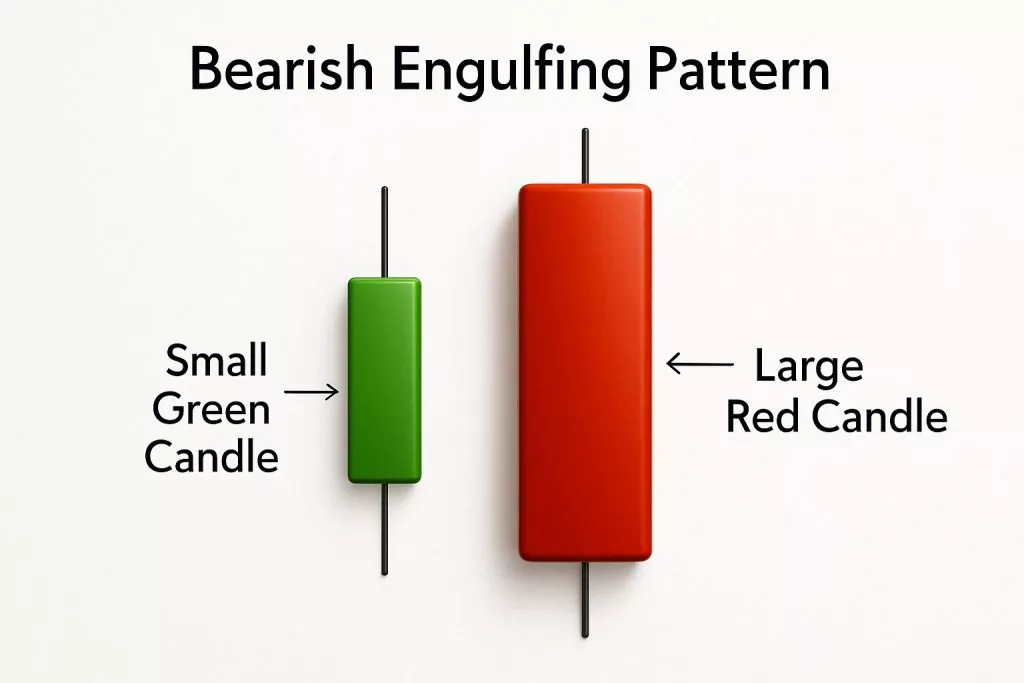
This shows that buyers tried to push higher but were overwhelmed by aggressive selling. The deeper the second candle, the stronger the shift in control.
Swing traders often:
- Use it as a signal to exit or trim long positions
- Consider short entries if the pattern appears near a clear resistance zone with strong volume
Evening Star
The Evening Star is the bearish sibling of the Morning Star and is one of the most-watched reversal patterns.
Structure:
- Long green candle continuing the uptrend
- Small body candle (star) that gaps up or trades above the first candle’s close
- Long red candle that closes deep into the first candle’s body
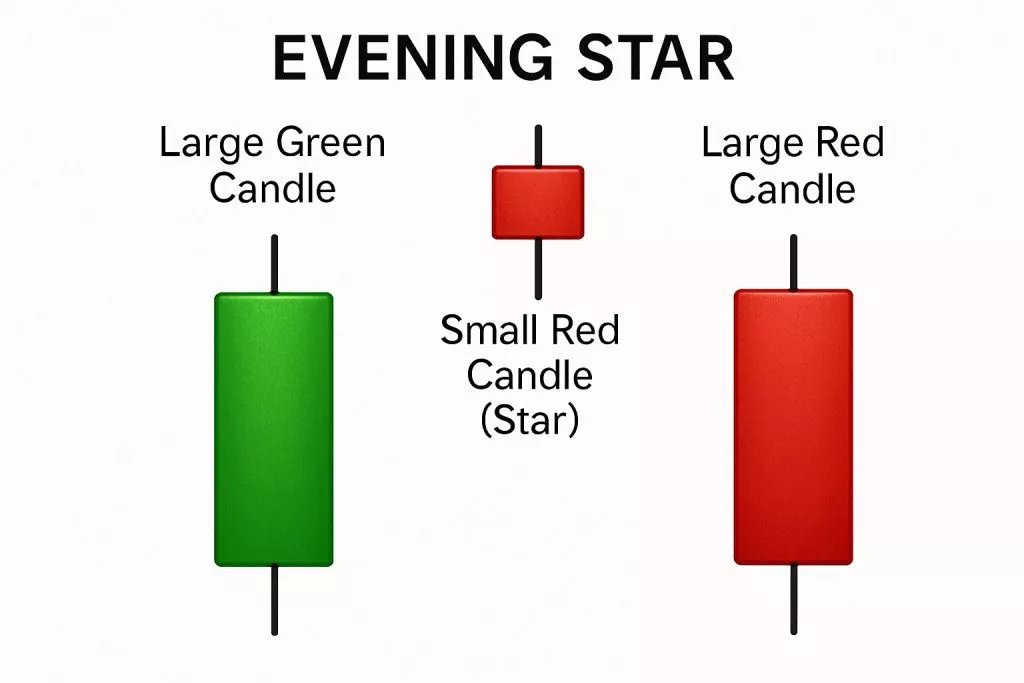
If the third candle erases most of the gains from the first, it signals a decisive change in sentiment from bullish to bearish.
Dark Cloud Cover
Dark Cloud Cover is a two-candle bearish reversal pattern.
Details:
- First candle: Strong green candle in an uptrend
- Second candle: Red candle that opens above the prior high but closes below the midpoint of the green body
That “dark cloud” over the prior bullish candle shows sellers suddenly in control.
Three Black Crows
The Three Black Crows pattern reflects sustained selling pressure after an advance.
Characteristics:
- Three long red candles in a row
- Each opens near the prior close and closes lower than the previous candle
- Shadows are small or absent
This pattern suggests a shift to a possible downtrend. Swing traders may consider short setups on minor bounces after the third candle.
Continuation And Indecision Candlestick Patterns
Not every pattern marks a top or bottom. Some reflect indecision or a pause within an existing trend. These are also important among the popular candlestick patterns in swing trading because they help you distinguish between a real reversal and a simple consolidation.
Doji
A Doji forms when the open and close are almost identical.
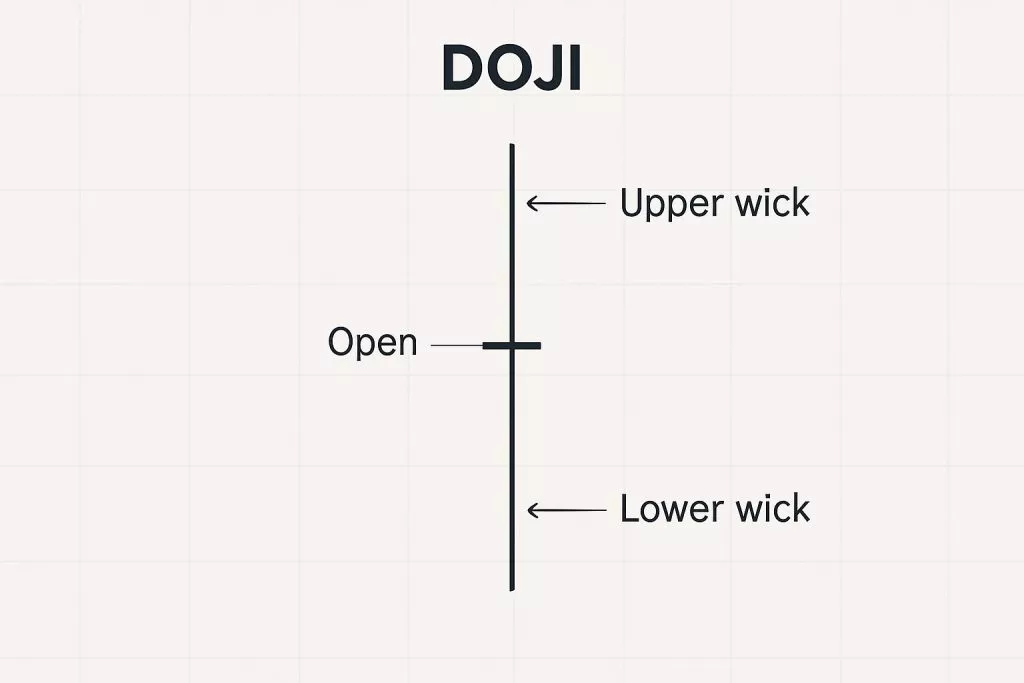
Key traits:
- Very small or non-existent body
- Shadows may be long or short
It represents a stand‑off between buyers and sellers. By itself, a Doji is neutral, but its location matters:
- After a strong rally or decline, it can signal exhaustion.
- Inside a consolidation, it often just reflects short‑term indecision.
Traders usually wait for the next candle to confirm direction before acting.
Spinning Top
A Spinning Top has:
- A small body near the middle of the range
- Upper and lower shadows of similar length
It shows that bulls and bears both tried to move the price, but neither side won decisively. In a trend, several Spinning Tops can indicate a loss of momentum and a possible upcoming breakout or reversal.
Rising Three Methods (Bullish Continuation)
The Rising Three Methods pattern signals a likely continuation of an uptrend.
Formation:
- Long green candle
- Three or so small red candles confined within the first candle’s range
- Long green candle that closes above the first candle’s high
The small red candles show a mild pullback, but the final strong green candle confirms that buyers remain in control and that the uptrend may resume.
Falling Three Methods (Bearish Continuation)
The Falling Three Methods is the bearish version.
Structure:
- Long red candle
- Three small green candles are trading within the first candle’s range
- Long red candle closing below the first candle’s low
It shows a brief counter‑trend rally that fails, followed by renewed selling and continuation of the downtrend.
Candlestick Patterns Summary Table
Here is a quick reference for some of the most popular candlestick patterns in swing trading covered above — patterns such as Engulfing and Star formations have been examined in studies identifying the Best Candlesticks Pattern to trade for consistent results:
| Pattern | Type | Signal | Best Used For | Buy/Sell Decision |
|---|---|---|---|---|
| Bullish Engulfing | Reversal | Bullish | Downtrend bottom | Buy, watch for confirmation |
| Bearish Engulfing | Reversal | Bearish | Uptrend top | Sell or short |
| Hammer | Reversal | Bullish | Downtrend bottom | Buy |
| Shooting Star | Reversal | Bearish | Uptrend top | Sell |
| Doji | Indecision | Neutral | Any trend point | Wait for confirmation |
| Morning Star | Reversal | Strong Bullish | Downtrend bottom | Buy |
| Evening Star | Reversal | Strong Bearish | Uptrend top | Sell |
How To Trade Popular Candlestick Patterns In Swing Trading
Spotting a candlestick pattern is only the first step — academic work on Generating a Trading Strategy using candlestick patterns confirms that a structured process is what separates consistent traders from those who rely on signals alone.
1. Start With The Bigger Trend
Use multiple timeframes:
- Weekly / Monthly charts: Identify the major trend (long-term uptrend, downtrend, or range).
- Daily chart: This is usually the primary timeframe for swing trading. Look for patterns at key levels.
- Intraday (30–60 minute): Fine‑tune entries and exits once you have a setup on the daily chart.
Try to trade in the direction of the higher‑timeframe trend as often as possible.
2. Find Patterns At Key Price Levels
The same candlestick looks very different depending on where it appears.
- Bullish patterns (Hammer, Bullish Engulfing, Morning Star) are stronger near support, previous lows, or the bottom of a consolidation.
- Bearish patterns (Shooting Star, Bearish Engulfing, Evening Star) carry more weight at resistance, prior highs, or the top of a channel.
Mark support and resistance first, then look for popular candlestick patterns in swing trading forming around those zones.
3. Confirm With Volume And Indicators
Candlestick patterns work best when backed by other signals:
- Volume: Breakouts or reversals should ideally show a volume surge. A big pattern on low volume can be a head fake.
- Moving averages: Many traders like to see bullish patterns form above rising 50‑day or 200‑day moving averages, and bearish patterns below falling ones.
- Momentum tools: Indicators like RSI or MACD can highlight when a reversal pattern appears after an overbought/oversold extreme.
Don’t overload your chart with indicators. Pick a small set that matches your style and stick with them.
4. Plan Your Entry, Stop-Loss, And Target
Every trade built on candlestick patterns should have clear rules:
Entry ideas:
- Enter as price breaks above the high of a bullish pattern or below the low of a bearish pattern.
- Or wait for a close beyond a pattern plus a small follow‑through move.
Stop-loss placement:
- For bullish setups, a common stop is just below the pattern low or the nearest logical support.
- For bearish setups, stops often sit above the pattern high or nearest resistance.
Profit targets can be based on:
- Prior swing highs/lows
- Measured moves (for example, the height of a range or pattern projected from the breakout)
- A chosen reward‑to‑risk ratio, such as 3:1
A classic trading reminder is, “Plan the trade and trade the plan.”
To combine technical setups with valuation checks, you can also read Why the P/E Ratio Matters While Selecting a Stock for Investing? and How to Know a Stock Is Overvalued Before Buying?.
5. Use Trailing Stops To Protect Gains
As the trade moves in your favor:
- Move your stop up (for long trades) to just under each new higher low.
- Or trail your stop under a short‑term moving average like the 10‑day or 21‑day.
- Some traders sell part of the position into strength and keep the rest with a tighter stop.
The goal is simple: cut losses fast and let winners run, without giving back too much profit.
An old market saying puts it this way: “Take care of your losses and the profits will take care of themselves.”
FAQs On Candlestick Patterns For Swing Trading
What Timeframe Is Best For Swing Trading With Candlestick Patterns?
Most swing traders rely on the daily chart for setups and use 4‑hour or 30–60 minute charts for precise entries and exits. Weekly charts help align trades with the broader trend and keep you focused on higher‑probability setups.
Can I Rely Only On Candlestick Patterns For Trading Decisions?
No. Candlestick patterns are powerful, but on their own they can produce many false signals. Combine them with:
- Trend analysis
- Support and resistance
- Volume
- A few confirming indicators
This combination is far stronger than using patterns alone, and it helps filter out low‑quality trades.
What Is The Difference Between A Hammer And A Shooting Star?
- A Hammer forms in a downtrend, has a long lower shadow, and points to potential bullish reversal.
- A Shooting Star appears in an uptrend, has a long upper shadow, and signals possible bearish reversal.
Their shapes are similar, but the trend context and shadow direction are different.
How Important Is Volume When Trading Candlestick Patterns?
Volume is very important. A major pattern with strong volume shows real commitment from buyers or sellers and is more likely to hold. A dramatic pattern on weak volume can easily fail or lead to a short‑lived move.
What Should I Do If I See A Doji Candle?
A Doji signals indecision. Instead of acting immediately:
- Wait for the next candle to confirm direction.
- If the Doji appears after a strong trend and the next candle reverses that trend, it can mark a turning point.
- Inside a range, it often just reflects noise.
Many traders also check volume and nearby support/resistance to judge how important the Doji really is.
Final Thoughts
Mastering the popular candlestick patterns in swing trading gives you a clear, repeatable way to read price action. When you combine these patterns with trend analysis, support and resistance, volume, and solid risk management, you put probabilities more on your side.
Start by focusing on a small set of patterns—such as the Hammer, Shooting Star, Bullish Engulfing, Bearish Engulfing, Morning Star, and Evening Star—and practice spotting them on historical charts. Keep a simple trading journal of each pattern, where it appeared, and how the trade played out. With time, you’ll start seeing these signals in real time and reacting with a consistent plan.
You may also like:
- Can Beginners Make Money in the Stock Market?
- How to Make Money in Intraday Trading Safely
- Avoid Losing Money in the Stock Market
- Are Stocks a Good Way to Make Money?

Bijay Kumar is a 12-time Microsoft Most Valuable Professional (MVP) and the founder of StocksInfo.AI, and TSinfo Technologies. With 18+ years of experience in the technology industry and hands-on investing experience in Indian equity markets, mutual funds, and ETFs since 2020, Bijay brings an analytical, data-driven perspective to personal finance. His mission is to make investing knowledge simple, practical, and accessible for every Indian investor. Read more about us >>