XIRR vs CAGR: Meaning, Formula and Which to Use
XIRR vs CAGR: Meaning, Formula and Which to Use

CAGR measures the yearly growth rate of a single investment with one start date and one end date, while XIRR measures the yearly return when money goes in or out on several different dates. For a lump sum the two give almost the same answer, but for a SIP only XIRR gives a meaningful annual … Read more >>

Direct vs Regular Mutual Fund: Cost, Returns and Switching

Direct vs Regular Mutual Fund: What It Costs You

A direct plan and a regular plan of the same mutual fund hold exactly the same portfolio, but the direct plan has a lower expense ratio because no distributor commission is paid from it. That gap, typically around 1 percentage point a year in active equity funds, is why direct plans deliver higher returns over … Read more >>

Index Fund vs ETF vs Mutual Fund: Passive or Active?

Index Fund vs ETF vs Mutual Fund: Passive or Active?

For most Indian investors putting money into large companies, a low-cost index fund or ETF is the better default, because most actively managed funds have trailed their benchmark over 5 and 10 years after costs. An actively managed mutual fund can still earn its place, mainly in mid- and small-cap stocks and only if you … Read more >>

Nifty Midcap 150 Index Fund: ETFs, Costs, P/E and Returns

Nifty Midcap 150 Index Fund and ETFs Explained

A Nifty Midcap 150 index fund is a passive mutual fund that buys the 150 companies in the Nifty Midcap 150 index in the same proportions, so its return is the index return minus costs. Over the five years to 30 September 2026 the index’s total return was 14.76% a year, and the cheapest funds … Read more >>

SIP vs Lump Sum: Which Is Better? 27 Years of Nifty Data

SIP vs Lump Sum: Which Is Better?

If you already have the money, investing it as a lump sum has usually ended with a bigger corpus than spreading it out, because more of it is in the market for longer. A SIP (systematic investment plan) wins on a different count: it cuts the risk of putting everything in just before a fall, … Read more >>

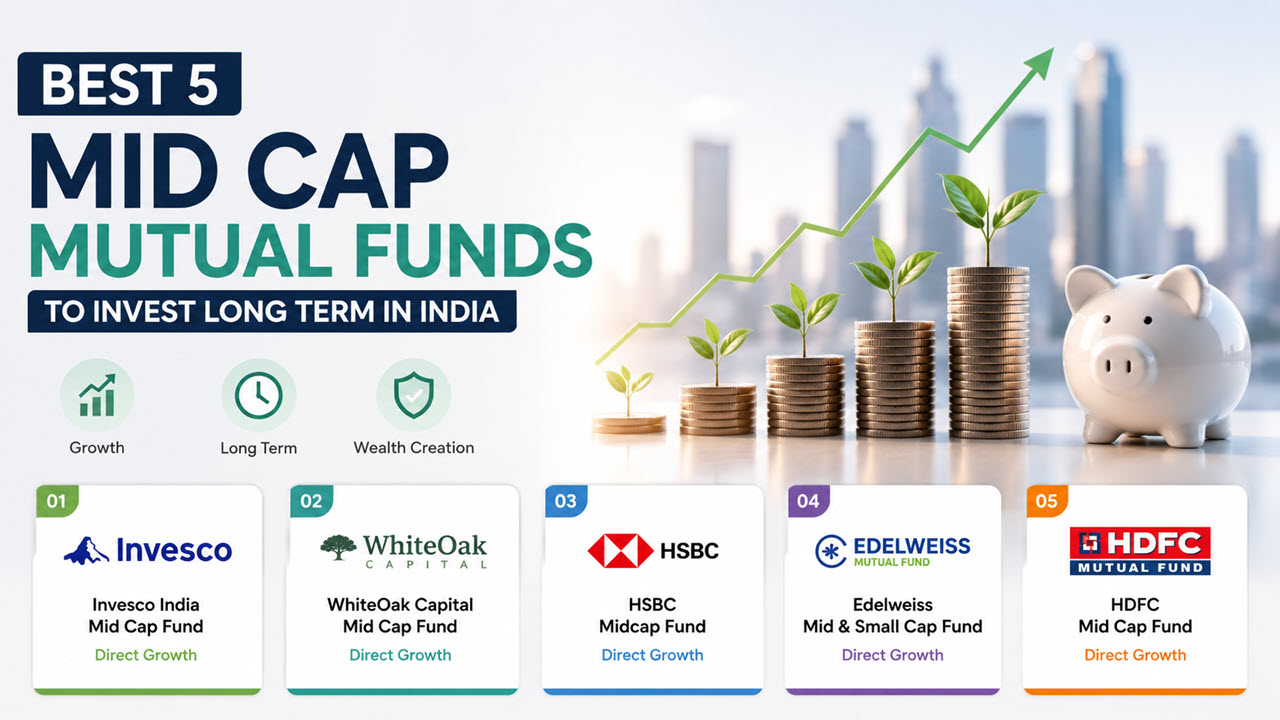
Best Mid Cap Mutual Funds in India: 5 Worth Shortlisting

Best mid cap mutual funds in India

There is no single best mid cap mutual fund, but a handful of pure mid-cap funds have done well across 3, 5 and 10 years and through two big crashes. In this article we compare five of them: HDFC Mid Cap Fund, Kotak Mid Cap Fund, Nippon India Growth Mid Cap Fund, Invesco India Mid … Read more >>

Trading vs Investing in India: Costs, Tax and Real Odds

Trading vs Investing

Investing means buying a share of businesses and holding for years so that their profits and your compounding do the work. Trading means trying to profit from price moves over minutes, days or weeks, and for most individuals in India the data says it loses money. This article compares the two side by side on … Read more >>

Power of Compounding: SIP Maths, Rule of 72 and Costs

How Power of Compounding Works in the Stock Market

Compounding means your returns start earning returns of their own, so money grows faster the longer it stays invested. Time matters more than the amount you start with: at an assumed 12% a year, a ₹10,000 monthly SIP grows to about ₹1 crore in 20 years but about ₹3.5 crore in 30. This guide shows … Read more >>

Asset Allocation for Indian Investors: A Practical Guide

Importance of Asset Allocation for Investors

Asset allocation is how you divide your money between asset classes such as equity, debt, gold, real estate and cash. It matters because it largely decides how much your portfolio swings from year to year, and therefore whether you can stay invested long enough to reach your goals. This guide covers the main asset classes … Read more >>