10 Ancillary Power Stocks in India Worth Researching (2026)

Best Ancillary Power Stocks in India for Long‑Term Investors

Ancillary power stocks are companies that make the equipment the grid runs on, such as transformers, cables, switchgear, conductors and smart meters, rather than companies that generate or sell electricity. The 10 listed below are examples worth researching because they sit directly in the path of India’s transmission spending, but several already trade at P/E … Read more >>


Best Mid Cap Mutual Funds in India: 5 Worth Shortlisting

Best mid cap mutual funds in India

There is no single best mid cap mutual fund, but a handful of pure mid-cap funds have done well across 3, 5 and 10 years and through two big crashes. In this article we compare five of them: HDFC Mid Cap Fund, Kotak Mid Cap Fund, Nippon India Growth Mid Cap Fund, Invesco India Mid … Read more >>

Trading vs Investing in India: Costs, Tax and Real Odds

Trading vs Investing

Investing means buying a share of businesses and holding for years so that their profits and your compounding do the work. Trading means trying to profit from price moves over minutes, days or weeks, and for most individuals in India the data says it loses money. This article compares the two side by side on … Read more >>

How to Reduce Capital Gains Tax on Shares in India (Legally)

How to Avoid Capital Gains Tax on Stocks

You cannot make capital gains tax on shares disappear, but you can legally cut it a lot. The biggest levers are holding for more than 12 months, using the ₹1.25 lakh yearly exemption on long-term gains, booking losses to offset gains, and spreading gains across years and family members. This guide sets out the current … Read more >>

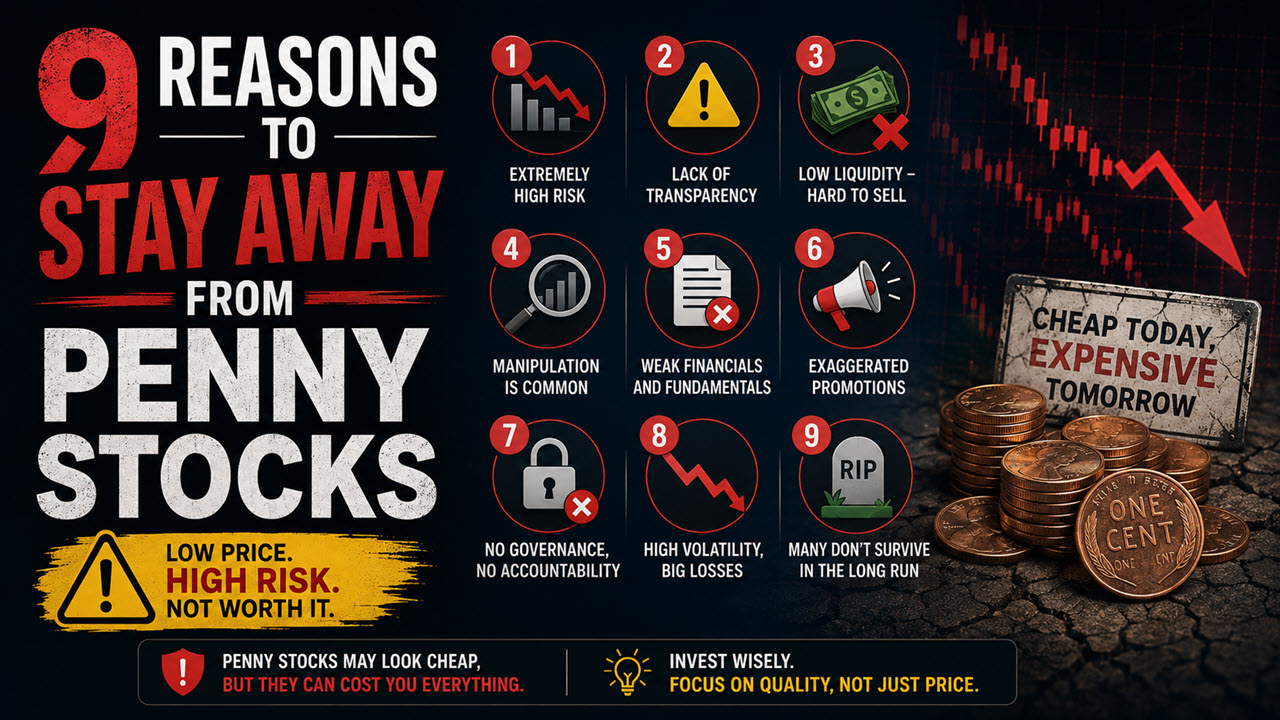
Penny Stocks in India: Why Most Investors Lose Money

Reasons to Stay Away from Penny Stocks

Most investors should stay away from penny stocks because the odds are stacked against them: the businesses are usually weak, the shares are hard to sell, and prices are easy to manipulate. You can make money with penny stocks, but the few big winners you hear about hide a much larger number of investors who … Read more >>

Power of Compounding: SIP Maths, Rule of 72 and Costs

How Power of Compounding Works in the Stock Market

Compounding means your returns start earning returns of their own, so money grows faster the longer it stays invested. Time matters more than the amount you start with: at an assumed 12% a year, a ₹10,000 monthly SIP grows to about ₹1 crore in 20 years but about ₹3.5 crore in 30. This guide shows … Read more >>

How to Know if a Stock Is Overvalued: A 7-Step Checklist

How to Know if a Stock Is Undervalued or Overvalued

A stock is likely overvalued when its price assumes more growth than the business can realistically deliver. You cannot tell from the share price alone; you find out by comparing the price with earnings, assets, cash flow, history, peers and the return available from safer assets. This article gives you a seven-step checklist you can … Read more >>

Are High Interest Rates Bad for the Stock Market?

Are High Interest Rates Bad for the Stock Market

High interest rates are usually a headwind for stocks, because they raise borrowing costs, slow spending and make safe assets like bonds and fixed deposits more attractive. Rate cuts work the other way, but neither hikes nor cuts decide the market’s direction alone: the Nifty actually rose during the RBI’s 2022–23 hiking cycle, and it … Read more >>