
After more than a decade of navigating bull markets, bear markets, and everything in between, I’ve learned that the difference between successful investors and those who struggle isn’t intelligence, luck, or even capital—it’s discipline.
The stock market is an emotional battlefield where fear and greed wage constant war against rational decision-making. Today, I’ll share the hard-earned lessons that have kept me disciplined through market crashes, euphoric rallies, and the countless moments when every instinct screamed to abandon my strategy.
The Psychology Behind Market Discipline
Discipline in the stock market isn’t just about following rules—it’s about understanding and overcoming the psychological biases that evolution hardwired into our brains. Our ancestors needed quick emotional responses to survive physical threats, but these same responses can destroy wealth in modern financial markets.
The two primary emotions that derail investors are fear and greed. Fear manifests as panic selling during market downturns, while greed drives us to chase hot stocks or hold positions too long during rallies. Both emotions trigger our fight-or-flight response, flooding our system with cortisol and adrenaline that impair rational thinking.
I’ve witnessed countless investors make the same mistakes repeatedly: buying high during market euphoria and selling low during panic. The dot-com crash of 2000, the financial crisis of 2008, and the COVID-19 market volatility of 2020—each event followed the same pattern of emotional decision-making overwhelming sound strategy.
Establishing Your Investment Framework
The foundation of market discipline is a well-defined investment framework. Without clear rules and objectives, you’re sailing without a compass, vulnerable to every emotional storm the market throws your way.
Define Your Investment Goals and Time Horizon
Start by crystallizing your investment objectives. Are you investing for retirement in 30 years, a house down payment in five years, or generating current income? Your time horizon fundamentally shapes your risk tolerance and asset allocation strategy.
I learned this lesson early when I initially treated my retirement investments like day-trading accounts. The constant buying and selling not only generated excessive fees but also prevented me from capturing long-term compound growth. Once I aligned my investment approach with my actual timeline, my results improved dramatically.
Establish Risk Tolerance Parameters
Risk tolerance isn’t just about how much volatility you can psychologically handle—it’s about how much you can afford to lose without compromising your financial security. I recommend the “sleep test”: if your portfolio’s fluctuations keep you awake at night, you’re probably taking too much risk.
Create specific rules around position sizing. I never allocate more than 5% of my portfolio to any single stock, regardless of how confident I feel about the opportunity. This rule has saved me from several potential disasters over the years, including when I was convinced certain “sure thing” stocks would double.
Check out Long Term Investment Strategies
The Art of Portfolio Construction and Management
Building a disciplined portfolio requires balancing diversification with conviction. Effective stock portfolio management involves research, performance analysis, and maintaining a balanced allocation to maximize returns while minimizing risks.
Diversification as a Discipline Tool
Proper diversification isn’t just risk management—it’s a discipline enforcement mechanism. When you’re properly diversified across sectors, market capitalizations, and geographies, no single investment decision can make or break your portfolio. This reduces the emotional weight of each decision and helps maintain perspective during volatile periods.
I structure my core holdings around broad market index funds, which provide instant diversification and eliminate the temptation to constantly tinker with my portfolio. These form about 70% of my equity allocation, with the remaining 30% dedicated to individual stock selections where I can apply more active management.
Regular Rebalancing: The Disciplined Investor’s Secret Weapon
Strategic allocation and regular rebalancing help maintain desired asset class weights and achieve long-term financial goals while mitigating market fluctuation impacts. Rebalancing forces you to sell high and buy low—exactly the opposite of what emotions tell you to do.
I rebalance quarterly, regardless of market conditions. During the 2020 pandemic crash, this meant selling bonds and buying stocks when everything seemed hopeless.
During the subsequent rally, it meant taking profits from stocks and buying bonds when everyone was euphoric. This mechanical approach removed emotion from these crucial decisions.
Check out Silver ETF Now for Long Term
Developing Emotional Intelligence in Trading
Market discipline requires developing what I call “investor emotional intelligence”—the ability to recognize, understand, and manage your emotional responses to market events.
Recognizing Emotional Triggers
Learn to identify your personal emotional triggers. Do you feel compelled to check your portfolio constantly during volatile periods? Do you experience FOMO (fear of missing out) when hearing about others’ investment gains? Do you rationalize holding losing positions longer than your rules dictate?
I keep a trading journal where I record not just what I bought and sold, but why I made each decision and how I felt at the time. Reviewing this journal quarterly has been invaluable for identifying patterns in my decision-making and emotional responses.
The Power of Predetermined Rules
Long-term investing success relies more on a disciplined strategy than on finding “hot” stocks or timing market swings. I’ve developed a set of predetermined rules that guide my investment decisions:
- Never invest money I’ll need within five years in individual stocks
- Set stop-losses at 20% for speculative positions
- Take partial profits when any position grows beyond 8% of my portfolio
- Never make investment decisions on days when markets move more than 3%
- Always sleep on major investment decisions
These rules remove emotion from critical moments when rational thinking is most difficult.

Risk Management: Your Safety Net
Effective risk management isn’t about avoiding risk—it’s about taking calculated risks within predetermined parameters. This is where discipline separates successful investors from gamblers.
Position Sizing and the 1% Rule
One of my most important discipline tools is strict position sizing. I never risk more than 1% of my total portfolio on any single trade. This might seem conservative, but it ensures that no single mistake can significantly damage my long-term wealth building.
For example, if I have a $100,000 portfolio and want to buy a stock at $50 with a stop-loss at $40, I can only buy 100 shares (risking $1,000 or 1% of my portfolio). This mathematical approach removes emotion from position sizing decisions.
The Importance of Stop-Losses
Stop-losses are perhaps the most emotionally challenging aspect of disciplined investing. Nobody wants to sell at a loss, but cutting losses short is essential for long-term success. I’ve learned to view stop-losses not as admissions of failure, but as insurance premiums that protect my capital for future opportunities.
Check out Advantage of Compound Interest in Stocks
Long-term Thinking vs. Short-term Noise
Maintaining portfolio allocation through all market conditions is crucial for long-term success. The market constantly bombarded us with short-term noise—daily price movements, news headlines, analyst opinions, social media chatter. Discipline means filtering this noise and focusing on long-term fundamentals.
The Media Influence Problem
Financial media thrives on creating urgency and drama around every market movement. During my early investing years, I consumed financial news voraciously, thinking I needed to stay informed about every development. Instead, this constant information stream increased my anxiety and led to overtrading.
Now I limit my financial news consumption to weekly summaries and focus on long-term trends rather than daily fluctuations. This has significantly improved both my peace of mind and my investment returns.
Building Patience Through Understanding
Patience isn’t just waiting—it’s waiting while maintaining conviction in your strategy. This requires deep understanding of your investments and the markets. When you truly understand why you own something, short-term price movements become less relevant.
I spend significant time researching companies before investing, understanding their business models, competitive advantages, and growth prospects. This research gives me the conviction to hold through temporary setbacks and the wisdom to sell when fundamentals deteriorate.
Read Take Advantage of a Stock Market Correction Now
Creating Systems and Routines
Discipline becomes easier when supported by systems and routines that automate good behavior and prevent emotional decision-making.
Systematic Investment Approaches
Dollar-cost averaging is one of the most powerful discipline tools available. By investing fixed amounts regularly regardless of market conditions, you remove timing decisions from the equation and reduce the impact of market volatility.
I automatically invest a fixed percentage of my income every month, treating it like any other essential expense. This system has helped me continue investing during scary market periods when my emotions urged caution.
Regular Portfolio Reviews
I conduct formal portfolio reviews quarterly, analyzing performance, rebalancing allocations, and assessing whether my strategy remains aligned with my goals. These reviews are scheduled in advance and follow a standardized checklist, preventing emotional or impulsive changes to my strategy.
Between these quarterly reviews, I avoid making major portfolio changes, regardless of market events or new information. This “cooling off” period prevents overreacting to short-term developments.
Check out How to Recover from a Big Loss in Stock Market
Learning from Mistakes and Continuous Improvement
Even the most disciplined investors make mistakes. The key is learning from these mistakes and continuously refining your approach.
Embracing the Learning Process
Every mistake is a learning opportunity if you’re willing to analyze what went wrong objectively. I’ve made plenty of errors over the years—buying stocks at peaks, holding losers too long, selling winners too early. Each mistake taught valuable lessons that improved my future decision-making.
Keep detailed records of your investment decisions and their outcomes. Regularly review both your successes and failures, looking for patterns and areas for improvement. This analytical approach transforms mistakes from costly setbacks into valuable education.
Adapting While Maintaining Core Principles
Markets evolve, and successful investors must adapt while maintaining core disciplinary principles. The rise of technology stocks, the growth of passive investing, the emergence of ESG considerations—all represent changes that require tactical adjustments within a disciplined framework.
However, adaptation doesn’t mean abandoning discipline. Core principles like diversification, risk management, and emotional control remain constant even as specific tactics evolve.
Conclusion: The Long Game of Wealth Building
After twelve years in the markets, I’ve learned that discipline isn’t a destination—it’s a daily practice. Every market day presents new challenges to your discipline, new emotions to manage, new information to process rationally.
Building a successful long-term portfolio requires clear goals, diversification, discipline, and patience. The investors who build lasting wealth aren’t necessarily the smartest or luckiest—they’re the most disciplined. They stick to their strategies through bull markets and bear markets, through periods of doubt and periods of euphoria.
Market discipline is ultimately about respecting both the power of compound growth and the destructive potential of emotional decision-making. By building systems, following rules, and maintaining perspective, you can harness the market’s wealth-building power while avoiding its psychological traps.
Remember, the stock market is not a casino—it’s a mechanism for participating in the growth of productive businesses over time. Treat it with the discipline it demands, and it can be your most powerful tool for building long-term wealth. The choice, as always, is yours.
You may also like:
- 9 Best AI Stocks Under $50 to Watch
- Machine Learning in Stock Market
- Be a Good Investor in the Stock Market: Practical Steps
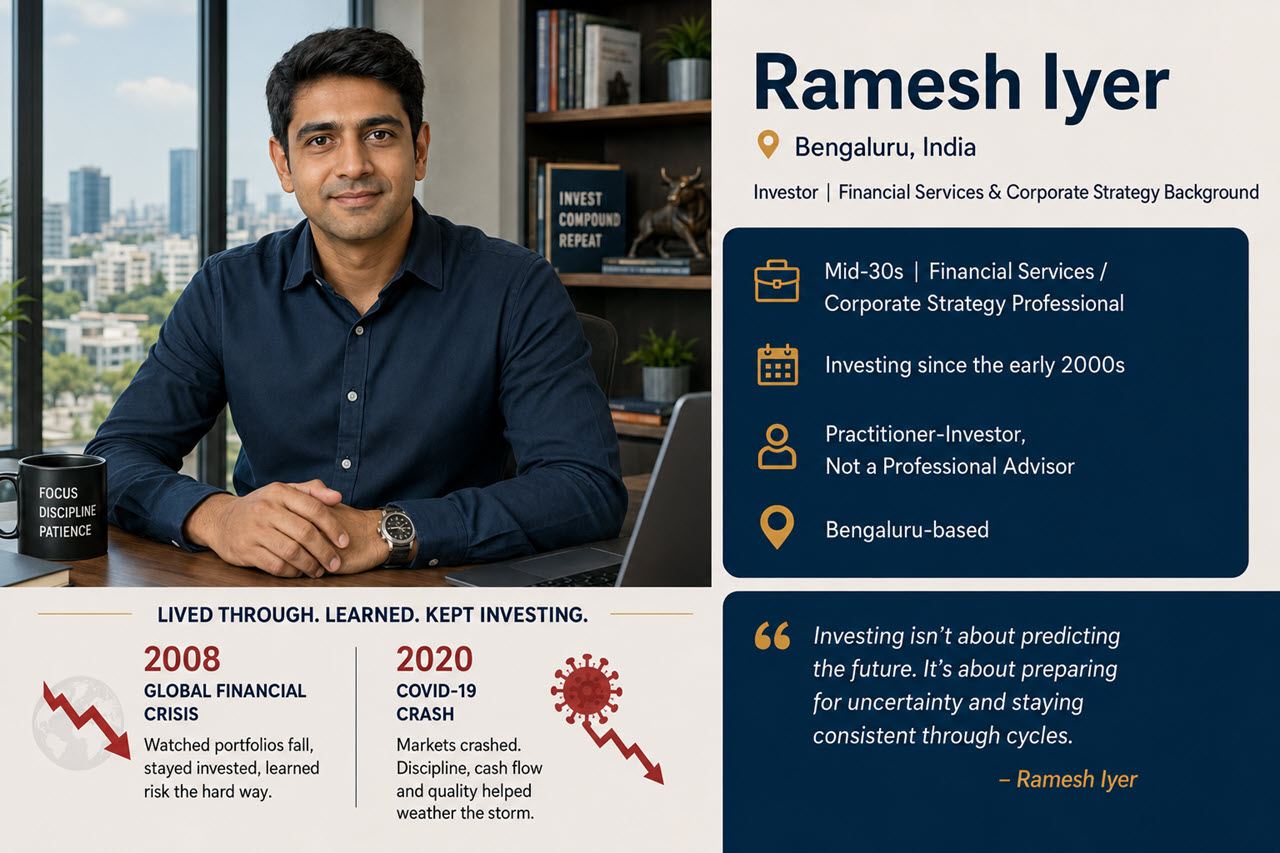
Ramesh Iyer is the founder of StocksInfo.AI, a Bengaluru-based investor with two decades of market experience, writing plain-language content on stocks, mutual funds, and ETFs for everyday Indian investors. Read more