
Unlisted shares in India are mostly bought through dealers and online platforms that source shares from existing holders and transfer them to your demat account off-market. None of these platforms is a SEBI-recognised stock exchange, and in June 2026 SEBI repeated its warning that investors using such platforms get no exchange-backed investor protection.
This article explains how platforms and dealers make money and move shares, compares several platforms investors commonly use based on what each states on its own website, summarises SEBI’s caution, and gives a due-diligence checklist covering the transfer process, payments, the CMR copy and price comparison. We do not rank or recommend any platform.
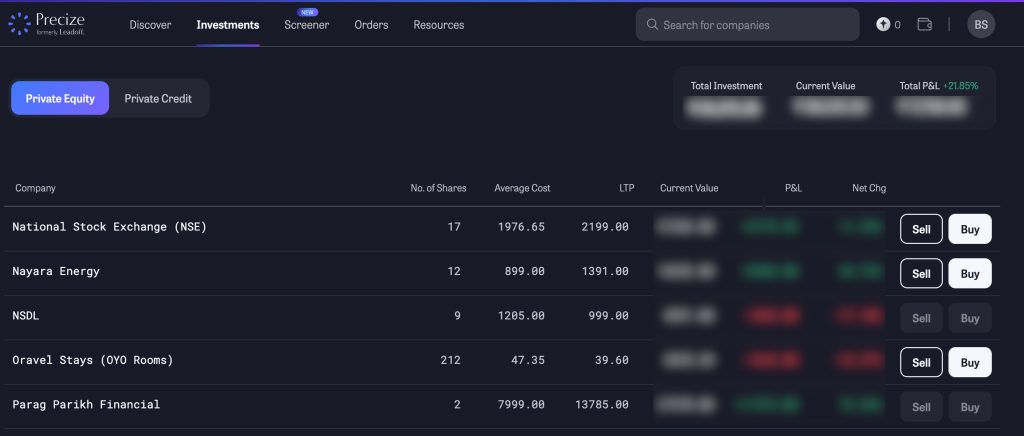
How unlisted share platforms and dealers work
There is no order book for unlisted shares. Supply comes from employees selling ESOP shares, early angel investors, and funds exiting before an IPO. A dealer buys these shares (or lines up a seller) and offers them to retail buyers at a higher price. The platform website is essentially a shop window for that inventory.
Platforms broadly follow one of three models:
- Principal or dealer: the firm sells you shares it already holds and is the other party to your trade.
- Facilitator or connector: the firm matches you with a seller through a relationship manager and handles paperwork.
- Marketplace: a website where multiple buyers and sellers list interest, with the platform verifying parties and coordinating settlement.
Most platforms advertise “zero brokerage”. That does not mean the trade is free. The dealer earns the spread, the gap between what it pays a seller and what it charges you. You see this when you ask the same platform for its buy-back price, which is usually well below its selling price.
How the shares reach your demat account
Because there is no exchange, the seller moves the shares from their demat account to yours through an off-market transfer, initiated through their depository participant (DP) with a delivery instruction slip or an online facility from NSDL or CDSL. The transfer carries a reason code (such as sale or purchase) and the consideration amount. Stamp duty of 0.015% on the transfer value is collected by the depository, so on a ₹2,00,000 purchase it would be ₹30.
Settlement is not simultaneous. Either you pay first and wait for the shares, or the dealer transfers first and waits for your money. Most platforms say delivery happens within a day, but there is no clearing corporation guaranteeing it. Our guide to unlisted shares explains the wider mechanics, including the six-month lock-in if the company lists.
What SEBI has said about unlisted share platforms
On 17 June 2026, SEBI issued press release PR 32/2026, cautioning investors against transactions in unlisted securities of public limited companies on electronic platforms and websites. SEBI said such platforms are neither authorised nor recognised by it, and that facilitating these trades violates the Securities Contracts (Regulation) Act, 1956 and the SEBI Act, 1992.
The key practical points in the advisory:
- Only SEBI-recognised stock exchanges may provide a platform for trading securities.
- SEBI-registered stockbrokers may deal only on recognised exchanges, so they should not facilitate these trades.
- Investors on these platforms have no access to SEBI’s investor protection framework, exchange grievance redressal or the online dispute resolution (ODR) system.
This was SEBI’s third advisory on the subject, after August 2016 and December 2024. Buying unlisted shares directly from a holder is not banned, but if a deal goes wrong your remedy is a civil or police complaint, not an exchange arbitration.
Platforms investors commonly use: a factual comparison
The table lists platforms in alphabetical order, using only what each states on its own website (as of October 2026). “Not stated” means we could not find the detail on the platform’s site, not that the answer is negative. Inclusion is not an endorsement, and terms change often, so check the site yourself.
| Platform | Model (as described by the platform) | Min investment | SEBI-registered broker? | Notes |
|---|---|---|---|---|
| Altius Investech | Facilitates buying and selling of unlisted, pre-IPO and ESOP shares | ₹10,000 | No registration claimed on site | Altius Investech Private Limited, Kolkata; states it is not a registered investment adviser |
| InCred Unlisted | Acts as counterparty on buy transactions | Not stated | Not stated; says it is not a SEBI-registered research analyst or adviser | Operated by ETA Fintech Private Limited; earlier marketed under InCred Money |
| Planify | Marketplace for unlisted and pre-IPO shares | ₹10,000 | No broker registration shown; site shows an AMFI ARN for mutual fund distribution | Says shares are typically credited within T+1 working days |
| Precize | Curated selection of private company shares | ₹10,000 | No; states it is not a stock exchange and not authorised by the capital markets regulator to solicit investments | Mumbai-based; advertises exit within 24–48 hours |
| Sharescart | Marketplace and information portal | Not stated | No; states it does not need a SEBI or RBI licence as it gives no advice | Operated by Blackvolt Digital Private Limited |
| Stockify | Marketplace connecting buyers and sellers | Not stated | No; states it is not a SEBI-registered broker, adviser or research analyst | Advertises verified sellers and fast settlement |
| UnlistedZone | Information platform; relationship managers connect buyers with sellers | Not stated | No; states it is not a SEBI-registered broker, adviser or portfolio manager | Operated by IZUZ Consultancy Private Limited, Noida; payment to its company bank account |
| WWIPL | Facilitates off-market demat-to-demat transfers | ₹5,000 | No; says it is not a SEBI-registered stockbroker | Wealth Wisdom India Private Limited; claims about 19 years in this market |
Two things stand out. First, none of these platforms claims SEBI registration as a broker for this activity, which matches SEBI’s position that brokers cannot deal off-exchange. Second, several are explicit that they are the seller, so their interest is in selling to you at a good price for them.
Due-diligence checklist before you buy
1. Understand the off-market transfer process
- Ask who moves first: do you pay before the shares arrive, or after?
- Get the ISIN (the unique code of the security) and confirm it matches the company and share class you are buying, not preference shares or a different entity.
- Ask for a written deal confirmation or invoice showing the company, quantity, price, total and settlement date.
- After delivery, check the holding in your demat statement from NSDL or CDSL, not just a screenshot from the dealer.
2. Pay only to the company’s bank account
- Transfer money only to a current account in the name of the registered company you are dealing with, matching the name on the invoice.
- Never pay to an individual’s account, a personal UPI ID, or an account that changes between messages.
- Check the company on the MCA portal: it should be active, and its directors and address should match the website.
3. Exchange and check the CMR copy
The client master report (CMR) is a document from your DP showing your demat account details: name, PAN, DP ID and client ID. The platform needs yours to send shares. Ask for the seller’s or dealer’s CMR too, and check that the name on it matches the entity you are paying, so the shares come from the party you are paying.
Share your CMR only with the platform you are transacting with. It contains personal details that should not be posted in group chats or forums.
4. Compare prices across platforms
- Get quotes for the same share from at least three platforms on the same day.
- Ask each for a buy-back price as well, to see the spread.
- Compare the quote with the company’s last funding round and its financials. Our guide on how to check the value of unlisted shares shows how.
Here is how the spread hits you, in a hypothetical case. Suppose Platform A sells a share at ₹1,000 and buys it back at ₹880, while Platform B sells at ₹960. Buying 200 shares from A costs ₹2,00,000; from B, ₹1,92,000, a saving of ₹8,000. If you bought from A and had to sell back to A the next week at ₹880, you would get ₹1,76,000, a loss of ₹24,000 (12%) with no change in the company’s value.
Common mistakes
- Treating a website price as the market price. It is one dealer’s asking price.
- Assuming a SEBI-registered parent protects you. Even if a group company holds a SEBI licence for another business, unlisted share deals sit outside exchange protection.
- Buying on IPO hype. Prices often rise on listing rumours, and many companies stay unlisted for years.
- Ignoring the exit. Before buying, ask how and at what discount you could sell if you needed the money.
- Putting too much in. Keep unlisted shares to a small part of your portfolio. Our piece on asset allocation covers how to size risky holdings.
For a full list of what can go wrong, read our article on the risks of investing in unlisted shares in India.
FAQ
Is it legal to buy unlisted shares through a platform in India?
Buying shares privately from an existing holder is not banned. However, SEBI said in June 2026 that electronic platforms facilitating trades in unlisted securities of public companies are not authorised and violate securities law. You carry the legal and settlement risk.
Can I buy unlisted shares through my stockbroker?
Generally no. SEBI-registered stockbrokers may deal only on recognised stock exchanges, and unlisted shares are not traded there. The shares can still be held in a demat account you opened with that broker.
What is the minimum amount needed?
Among platforms that publish a minimum, the figures we found were ₹5,000 to ₹10,000 (as of October 2026). The real minimum also depends on the share price and the lot a dealer is willing to sell.
How long does an unlisted share transfer take?
Platforms typically say within one working day after payment and paperwork. Nothing guarantees this, so agree the timeline in writing and check your demat statement once it is done.
How are gains on unlisted shares taxed?
Gains on shares held for more than 24 months are taxed at 12.5% without indexation; shorter-term gains are taxed at your slab rate. Budget 2026 left these rates unchanged. See our guide to reducing capital gains tax.
Where do I complain if a deal goes wrong?
Because these platforms are outside SEBI’s framework, exchange grievance and ODR channels do not apply. Keep all invoices, payment proofs and messages; you may need a legal notice, a consumer or civil case, or a police complaint for fraud.

Ramesh Iyer is the pen name of the founder and editor of StocksInfo.AI, an independent investor in Indian equities, mutual funds and ETFs since 2020. Every article is researched from primary sources such as SEBI, AMFI, NSE and the Income Tax Department, and fact-checked before publishing. About us