
You may have opened a trading app after work, seen NIFTY option contracts moving fast, and wondered how people make or lose thousands within minutes. I faced the same confusion after setting up my Demat account, starting a mutual fund SIP, and slowly learning that trading and investing require very different mindsets.
A salaried investor may begin with ₹5,000 a month in an equity mutual fund for retirement or children’s education, then hear colleagues discuss calls, puts, premiums, and expiry day profits. Options look exciting, but they carry risk that beginners often underestimate. This concept guide explains what option trading is, how it works on the NSE and BSE, and how to approach it responsibly.
What Is Option Trading?
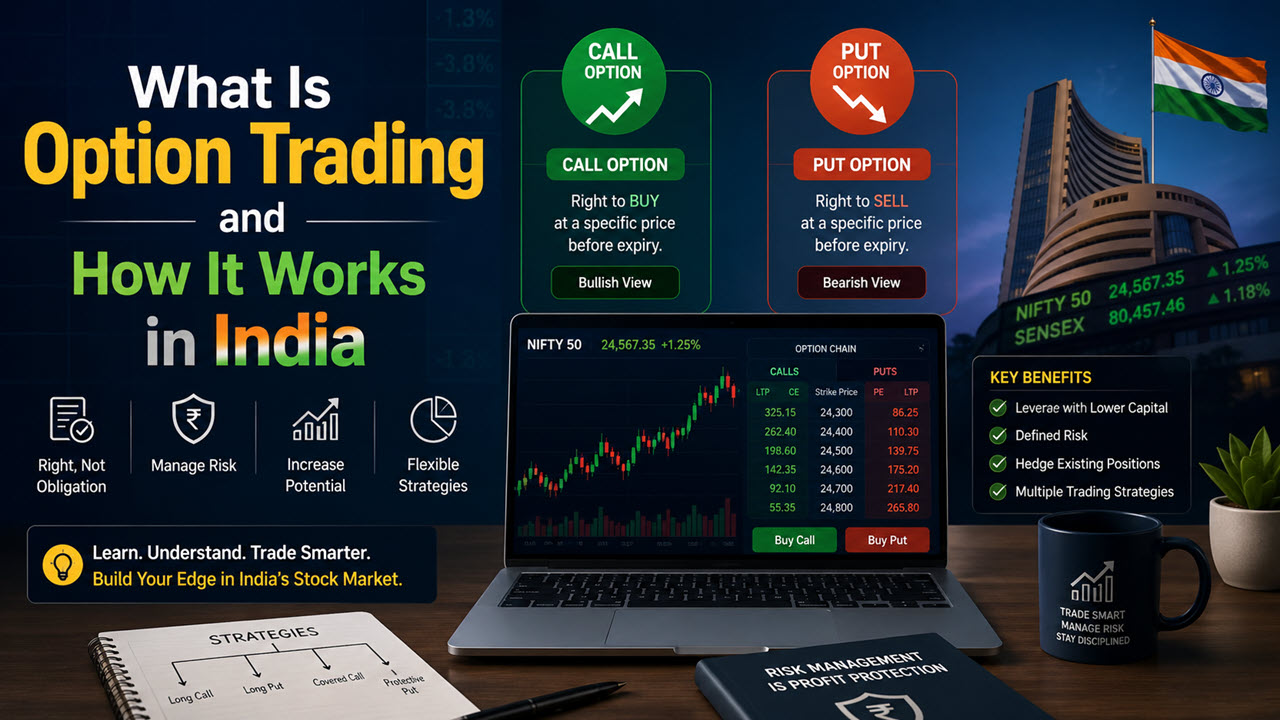
Option trading means buying or selling a contract that gives someone the right to buy or sell an underlying asset at a fixed price on or before a specified date. The underlying asset may be an index such as NIFTY 50 or BANK NIFTY, or an individual stock listed on the NSE or BSE.
An option is not the same as buying a share. When you buy a company’s share, you become a part-owner of that business. When you buy an option, you trade a time-bound contract based on the expected price movement of that share or index.
There are two main types of options:
- Call option: Gives the buyer the right to buy the underlying asset at a fixed price. Traders generally buy a call when they expect prices to rise.
- Put option: Gives the buyer the right to sell the underlying asset at a fixed price. Traders generally buy a put when they expect prices to fall.
For example, suppose NIFTY trades near 22,000. If you expect NIFTY to rise over the next few days, you may buy a 22,100 call option. If NIFTY moves above that level strongly, the option price may rise. If NIFTY falls or stays flat, your option may lose value quickly.
That time limit is what makes option trading different and dangerous. A good market view is not enough. You must also be right about direction, timing, and the speed of the move.
Before entering this space, understand the difference between trading and investing. Investing focuses on business growth and long-term compounding. Trading focuses on price movement over a shorter period.
How Option Trading Works
Option trading works through contracts. Every contract has a defined underlying asset, strike price, expiry date, lot size, and premium. Once you understand these five parts, the option chain starts making more sense.
Let us use Suresh, a 30-year-old salaried professional, as an example. He invests ₹10,000 every month, with ₹7,000 going into a long-term mutual fund SIP and ₹3,000 set aside for learning market-related skills. He should never treat his retirement SIP money as trading capital.
Underlying Asset
The underlying asset is the financial instrument on which the option contract depends. In India, common underlying assets include NIFTY 50, BANK NIFTY, FINNIFTY, and selected stocks.
If Suresh buys a NIFTY call option, he does not buy all 50 NIFTY companies. He buys a contract whose value changes based on NIFTY’s movement.
Index options usually attract more trading interest because they are liquid. Liquidity means many buyers and sellers are available, so entering and exiting positions is generally easier. Still, liquidity does not remove risk.
Strike Price
The strike price is the agreed price at which the option buyer may buy or sell the underlying asset.
Suppose NIFTY trades at 22,000:
- A 22,000 call option has a strike price of 22,000.
- A 22,100 call option has a strike price of 22,100.
- A 21,900 put option has a strike price of 21,900.
The strike price helps you judge whether an option sits near, above, or below the current market price. New traders often choose very cheap options with far-away strike prices. They look affordable, but they often expire worthless because the market does not move far enough.
Premium
The premium is the price you pay to buy an option. Think of it as the contract cost.
Suppose Suresh buys a NIFTY call option at a premium of ₹100. If the lot size is 50 units, his total purchase cost is:
₹100×50=₹5,000
His maximum loss as an option buyer is normally limited to the ₹5,000 premium plus charges. That limited-loss feature attracts beginners. However, the entire premium can disappear, especially close to expiry.
Option sellers receive premium upfront, but they take on much higher risk. A seller may need significant margin, which is money blocked by the broker to cover potential losses. A sharp move against an uncovered option seller can create losses far larger than the premium received.
Pro Tip: I have found that beginners focus too much on how cheap an option looks. A ₹10 option is not automatically safer than a ₹150 option. Cheap contracts often have low chances of finishing profitable.
Expiry Date
Every option contract has an expiry date. After expiry, the contract stops trading and loses most of its relevance. In India, index and stock derivatives follow exchange-specified expiry schedules.
Time works against option buyers. This loss of value due to passing time is called time decay. If the market does not move enough in your favour, your option premium may decline every day, even when your view seems broadly correct.
For example, Suresh expects NIFTY to rise within a month. He buys a call option that expires tomorrow because it is cheap. NIFTY rises slightly, but not enough before expiry. The option can still lose value because time decay accelerates sharply near expiry.
This is why option trading is not simply “buy when bullish and sell when bearish.” Time and volatility matter as much as direction.
Lot Size
Options trade in standard lot sizes, not single units. A lot size tells you how many units one contract represents.
If an option premium is ₹80 and the lot size is 50, one lot costs:
₹80×50=₹4,000
Always calculate the full lot value before placing an order. A premium that appears small per unit may require a much larger outlay after multiplying it by the lot size.
Call Option Trading Explained
A call option benefits when the underlying asset rises enough. Buyers use calls when they expect a bullish move.
Assume NIFTY trades at 22,000. Suresh buys a 22,100 call option at ₹100, with a lot size of 50. His total premium paid is ₹5,000.
If the option premium rises from ₹100 to ₹160, Suresh can sell the contract before expiry:
(₹160−₹100)×50=₹3,000
His gross profit is ₹3,000 before brokerage, taxes, and other charges.
But if NIFTY falls and the premium drops from ₹100 to ₹40, his loss becomes:
(₹100−₹40)×50=₹3,000
If the option expires with no value, he loses the full ₹5,000 premium. That is why a trader must decide the exit level before entering the trade.
A call buyer needs a meaningful upward move. A small increase in NIFTY may not help if time decay and falling market volatility reduce the premium.
Put Option Trading Explained
A put option benefits when the underlying asset falls enough. Buyers use puts when they expect a bearish move or want protection against an existing portfolio.
Assume Suresh owns a portfolio of large-cap shares and worries about a short-term market fall before a major event. He may buy a put option as a hedge. A hedge is a position that tries to reduce the impact of losses elsewhere.
Suppose he buys a NIFTY 21,900 put at ₹90 with a lot size of 50. The total premium is:
₹90×50=₹4,500
If NIFTY drops sharply, the put premium may increase. Suresh can sell the put for a profit, which may partly offset losses in his share portfolio.
However, buying puts repeatedly without a clear purpose can drain money. Insurance has a cost, and options used as insurance also have a cost. Use hedging only when you understand the position and its purpose.
For long-term wealth creation, a diversified mix of equity mutual funds, index funds, and suitable debt allocation usually makes more sense than frequent option trades. You can also compare ETFs and mutual funds before deciding how to build your core portfolio.
Option Buyer vs Option Seller
Options have buyers and sellers. Their risk profiles are very different.
| Factor | Option Buyer | Option Seller |
|---|---|---|
| Main action | Pays premium to buy a call or put | Receives premium by selling a call or put |
| Maximum loss | Usually limited to premium paid | Can be very large, especially in uncovered positions |
| Capital needed | Lower upfront premium, though lot value matters | Higher margin requirement |
| Time decay | Usually works against the buyer | Usually works in favour of the seller |
| Best for | Learners who first understand defined risk | Experienced traders with strict risk controls |
An option seller, also called an option writer, earns premium when the option loses value. This sounds easy, but it is not. A sudden index move, gap-up opening, or sharp stock rally can create huge losses for sellers.
For example, Suresh sells an uncovered call option for ₹5,000 premium. The market jumps after unexpected news, and the premium rises sharply. His loss may exceed the ₹5,000 he received by a wide margin.
I would not advise a beginner to start by selling naked options. A naked option is an option sale without an offsetting position that limits risk. Learn defined-risk strategies and position sizing first.
Important Option Trading Terms
Here are the terms you will see most often on an option chain and trading screen.
In the Money, At the Money, and Out of the Money
An option’s position relative to the current market price affects its price and probability.
- In the money (ITM): The option already has intrinsic value. For example, a 21,900 call is ITM when NIFTY trades at 22,000.
- At the money (ATM): The strike price sits close to the current market price. A 22,000 option is ATM when NIFTY trades near 22,000.
- Out of the money (OTM): The option has no intrinsic value yet. A 22,300 call is OTM when NIFTY trades at 22,000.
OTM options often look cheap. Many beginners buy them hoping for a jackpot. In reality, they need a larger and faster move to gain value.
Intrinsic Value and Time Value
An option premium has two broad parts: intrinsic value and time value.
Intrinsic value is the immediate value if you exercised the option now. Time value reflects the possibility that the market may move before expiry.
As expiry approaches, time value falls. This is why holding an option without a plan is costly. You do not just need to predict the market; you need to predict it before time runs out.
Volatility
Volatility means the speed and size of price movement. Higher volatility often increases option premiums because large movements become more likely.
Many beginners buy options before big events, such as the Union Budget, RBI policy announcements, or election results. Premiums may already be expensive because the market expects volatility. After the event, premiums can fall sharply even when the index moves in the expected direction.
Stop-Loss
A stop-loss is a predefined exit level that limits a trade’s loss. If Suresh buys an option at ₹100, he may decide to exit at ₹70. His planned risk becomes ₹30 per unit, or ₹1,500 for a 50-unit lot.
A stop-loss does not guarantee a perfect exit during sudden price gaps. Still, it gives structure and prevents emotional averaging when a trade goes wrong.
Learn more practical ways to avoid losing money in the stock market before risking real capital.
How Beginners Should Approach Option Trading
Option trading is not a replacement for a savings plan, emergency fund, health insurance, or long-term investments. Build those foundations first.
Suresh earns ₹80,000 per month. He starts by maintaining an emergency fund, contributes ₹7,000 to diversified mutual funds through a SIP, and invests another amount into long-term assets. A SIP, or Systematic Investment Plan, lets you invest a fixed amount regularly in a mutual fund. The fund uses NAV, or Net Asset Value, to calculate how many units your money buys.
If Suresh still wants to learn options, he should define a small learning budget. For example, he may use only ₹2,000 to ₹5,000 per month that he can afford to lose without affecting household goals.
A safer beginner path looks like this:
- Learn price action, market structure, and basic risk management before placing real trades.
- Track NIFTY options on paper for several weeks without using actual money.
- Understand one simple setup instead of trading every market move.
- Start with option buying only after you understand total premium, lot size, expiry, and stop-loss.
- Trade small enough that one loss does not affect your sleep or monthly budget.
- Keep a trading journal with entry reason, exit reason, profit or loss, and the lesson learned.
Avoid using money meant for your home loan EMI, insurance premium, children’s school fees, or mutual fund SIP. Option trading rewards discipline, but it punishes urgency and overconfidence.
Pro Tip: In my experience, the fastest way to damage a trading account is trying to recover a loss on the same day. I stop trading after my daily loss limit instead of taking a larger second trade.
Option Trading vs Long-Term Investing
Option trading and long-term investing serve different goals. You can learn both, but you should not confuse one with the other.
| Area | Option Trading | Long-Term Investing |
|---|---|---|
| Goal | Benefit from short-term price movement | Build wealth through business growth and compounding |
| Time horizon | Minutes, days, or weeks | Years or decades |
| Main tools | Options, charts, volatility, risk limits | Shares, mutual funds, ETFs, asset allocation |
| Stress level | High, especially near expiry | Lower when portfolio is diversified |
| Capital behaviour | Frequent gains and losses | Gradual growth with market cycles |
| Suitable use | Small, controlled learning capital | Core money for major financial goals |
A well-planned index fund or ETF can support long-term investing. An ETF, or exchange-traded fund, holds a basket of securities and trades on the exchange like a stock. Read these ETF investing tips if you want a simple market-linked investment route.
For example, investing ₹5,000 every month through a SIP for 15 years at an assumed 12% annual return could grow to roughly ₹25 lakh. Returns never come with guarantees, but this example shows why regular investing deserves priority over chasing quick option profits.
If you want to build wealth steadily, understand the power of compounding and give your investments enough time.
Things to Keep in Mind
- Treat premium as risk capital: An option buyer may lose the entire premium, so use only money you can afford to lose.
- Avoid expiry-day gambling: Time decay moves quickly near expiry, and cheap options often become worthless within hours.
- Never average a losing option blindly: An option can fall from ₹100 to ₹10 faster than a normal share because time value disappears.
- Use a fixed position size: Decide your maximum loss per trade before entry, such as 1% of your trading capital, and follow it.
- Do not copy social-media tips: A tip never reveals the other person’s entry price, exit plan, risk capacity, or full portfolio.
- Keep investing separate from trading: Continue your SIPs and long-term investment plan even if you choose to learn options with a small amount.
Frequently Asked Questions
Is option trading safe for beginners in India?
Option trading carries high risk, especially when you trade without understanding expiry, lot size, premium, and stop-loss. Beginners should first learn with paper trades and use only a small learning budget. Long-term SIPs, index funds, and diversified mutual funds suit most beginners better.
How much money do I need to start option trading in India?
The amount depends on the option premium and lot size. Some option-buying trades may require a few thousand rupees, but you should also plan for losses and charges. Do not start with your entire savings just because the upfront premium looks low.
Can I lose more than my investment in option trading?
An option buyer usually risks only the premium paid plus charges. An option seller can face much larger losses, especially with uncovered or naked positions. Beginners should understand this difference before selling any option.
What is the difference between a call and put option?
A call option generally gains value when the underlying asset rises. A put option generally gains value when the underlying asset falls. Both contracts lose value when time passes without a sufficient market move.
Can I do option trading with a Demat account?
You need a Demat account to hold securities digitally and a trading account to place buy and sell orders on the exchange. Your broker must also activate the required derivatives segment after completing applicable checks. A trading account lets you transact, while a Demat account stores shares and other eligible holdings electronically.
Is option trading better than SIP in mutual funds?
They serve different purposes. Option trading targets short-term price movements and needs active risk management, while a mutual fund SIP supports long-term goals through regular investing. For most salaried beginners, SIP investing should come before option trading.
Option trading involves calls, puts, strike prices, premiums, lot sizes, expiry, volatility, and disciplined risk management. Start simple, keep your long-term investments and SIPs as your priority, and use only limited capital for learning and trading. I hope you found this article helpful.
You May Also Like
- Can beginners make money in the stock market?
- How to maintain discipline in the stock market
- Can technical analysis make money?
- How to recover from a big stock market loss
- Best ETFs for Indian investors
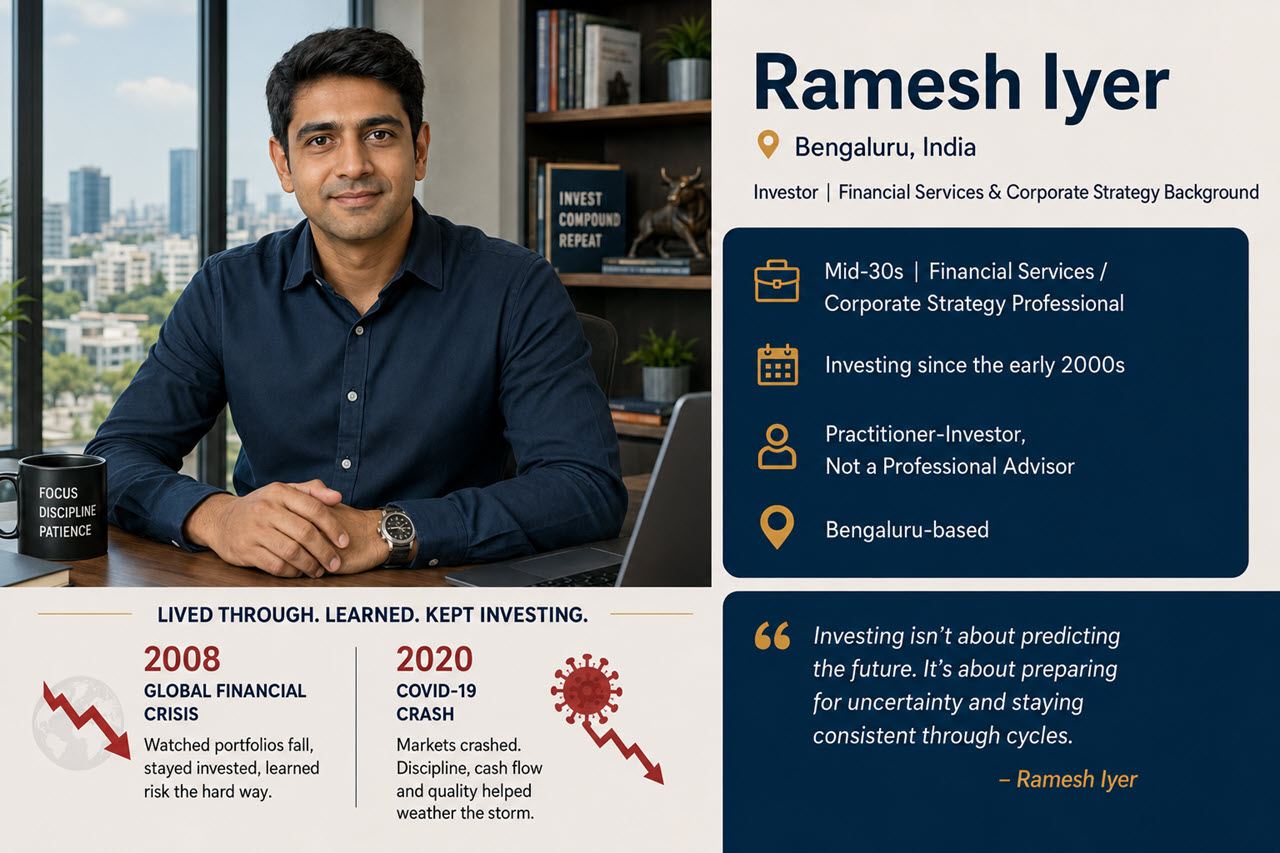
Ramesh Iyer is the founder of StocksInfo.AI, a Bengaluru-based investor with two decades of market experience, writing plain-language content on stocks, mutual funds, and ETFs for everyday Indian investors. Read more