
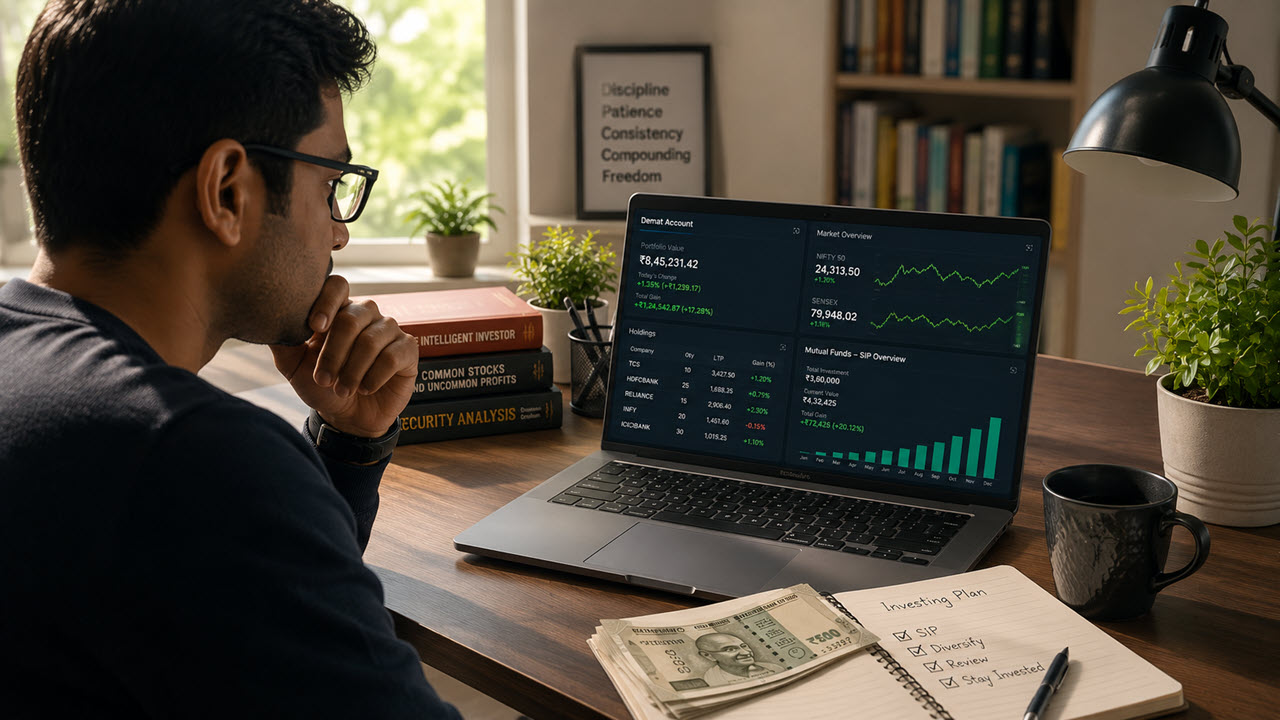
I still remember the first time I opened a Demat account and a trading account. I had heard stories of people making quick money in the stock market, but I also knew a few who lost a lot by chasing tips and excitement. Like most Indian salaried investors, I wanted a simple way to grow money for the long term without turning my life into a trading screen.
That is where the real question starts: can everyone make money in the stock market? The honest answer is no, not in the same way, and not all at once. But with the right habits, the right products, and enough patience, many people can build wealth through NSE, BSE, mutual funds, SIP, and even a small part in direct stocks.
Can Everyone Make Money in the Stock Market?
Not everyone makes money in the stock market because the market rewards discipline, patience, and good decisions more than luck. If you buy randomly, sell in panic, and chase hot tips, the odds are against you.
The stock market is not a money machine. It is a place where business ownership changes hands every day. Some people win because they think long-term, manage risk, and stay consistent. Others lose because they confuse investing with gambling. That difference matters more than intelligence or income.
For a beginner in India, the easiest way to understand this is simple. If you put ₹5,000 a month into a good SIP in a diversified mutual fund or index fund, you are building a habit. If you take the same ₹5,000 and keep buying random small-cap or unlisted shares based on social media noise, you are taking a very different path.
What Makes Stock Market Investing Work
A stock is a small ownership part of a company listed on the NSE or BSE. When that business grows, the market often rewards shareholders through price appreciation, dividends, or both. But this does not happen every month, and it does not happen in a straight line.
The stock market works best when your time horizon is long. A business needs time to grow revenue, expand profits, and improve investor confidence. That is why long-term investors usually do better than people who jump in and out every week.
Here is the practical side. If Suresh, a 30-year-old salaried professional, invests ₹10,000 every month for 15 years, his wealth can grow far more than he expects because of compounding. The monthly investment itself matters, but consistency matters even more. This is why power of compounding becomes such a big deal in Indian investing.
Who Can Actually Make Money
People who make money usually share a few traits. They do not need to be finance experts, but they do need a process. They often start with simple products, understand what they own, and avoid unnecessary trades.
Here are the kinds of investors who have a better chance:
- People who invest money they do not need right away.
- People who stay invested through market ups and downs.
- People who understand the difference between investing and trading.
- People who diversify across sectors, market caps, or fund types.
- People who keep learning instead of following rumors.
A beginner does not need to beat the market in year one. That mindset usually creates stress. A better goal is to build a portfolio that grows steadily and does not force panic during corrections.
A Simple Way to Start
If you are starting from zero, keep it simple. First, open a Demat account if you want to hold shares electronically, and a trading account if you want to buy and sell on the exchange. For mutual funds, you can invest through a platform that supports SIP or direct plans.
A SIP means Systematic Investment Plan. You invest a fixed amount every month, like ₹2,000, ₹5,000, or ₹10,000. This helps you invest regularly without worrying too much about timing the market.
A NAV is the price of one mutual fund unit. If a fund’s NAV is ₹25, that does not mean it is cheap. It only tells you the current unit price. A lower NAV is not automatically better, and a higher NAV is not automatically bad.
An ETF is an exchange-traded fund. You buy and sell it like a stock on the NSE or BSE, but it usually tracks an index, gold, silver, or another basket of assets. For beginners, ETFs can be a clean and low-cost way to invest.
Why Most People Lose Money
Most investors lose money for a few boring but powerful reasons. They buy when excitement is high and sell when fear is high. They take advice from social media, relatives, or random WhatsApp groups. They ignore valuation, business quality, and risk.
Another common mistake is concentration. A person puts most of the money into one hot stock or one sector, and then a bad earnings season wipes out confidence. That is how many beginners get hurt in direct equity.
There is also the problem of overtrading. Every buy and sell looks exciting, but brokerage, taxes, and bad timing slowly eat returns. Long-term investing looks dull, but dull often wins.
Pro Tip: I have found that most beginners do better when they stop checking portfolios every day. The more you stare at short-term price changes, the more likely you are to make emotional decisions.
Mutual Funds vs Direct Stocks
For most beginners, mutual funds are the easier starting point. A fund manager or a rules-based strategy handles the stock selection, and your money gets spread across many companies. That reduces the damage if one stock performs badly.
Direct stocks can still create wealth, but they demand more work. You need to understand business quality, earnings, debt, valuation, and long-term prospects. That is not impossible, but it takes time.
A simple example helps. Suppose Suresh invests ₹5,000 monthly in a broad index fund that tracks the market. He gets diversification from day one. If he instead buys a single company and that company struggles, his entire outcome depends on a single decision. That is a big difference.
If you want a plain-English breakdown of ETF vs mutual fund, or want to understand long-term investment strategies, those are the kinds of concepts that help a beginner stay realistic. The same goes for learning how trading vs investing actually works in day-to-day life.

What About Small Caps and Unlisted Shares
This is where many Indian investors get tempted. Small cap stocks and unlisted shares can offer big upside, but they also carry much higher risk. Prices can move fast, liquidity can be poor, and information can be limited.
An unlisted share is a share in a company that is not yet traded on a main stock exchange. People are often attracted by the idea of buying before listing. But the truth is simple: if the company does not list soon, or if the valuation is too high, your money can stay stuck for a long time.
Small-cap investing and unlisted investing are not bad. They just need a strong risk appetite and a lot of patience. Beginners should treat them as a small satellite part of a larger portfolio, not the main engine.
For a broader view, it helps to understand the risks of investing in unlisted shares in India and the benefits of investing in unlisted shares over listed stocks before putting real money there. That kind of knowledge prevents impulsive decisions.
Can You Make Money Without Timing the Market?
Yes, and this is where many people misunderstand investing. You do not need to predict every move in the market to make money. You need to stay invested in quality assets long enough for compounding to work.
That is why many Indian investors do better with monthly investing than with full-time market watching. A regular SIP into a broad mutual fund or ETF builds discipline. It also reduces the pressure of choosing the perfect entry point.
Imagine two investors. One invests ₹1,20,000 in one shot at the wrong time and panics after a fall. The other invests ₹10,000 per month for 12 months and keeps going through ups and downs. The second investor often handles emotions better, which usually improves real-world results.
How to Think About Risk
Risk is not just loss. Risk also means uncertainty, volatility, and the chance of making a bad decision under pressure. In the stock market, risk is part of the game. The goal is not to remove it completely. The goal is to manage it.
Start by matching your investments to your time horizon. If you need money in one year, stocks are usually a poor place for that goal. If your goal is retirement or a child’s education ten years away, equity can make much more sense.
Also, never invest borrowed money in stocks. That turns normal market volatility into personal stress. Use only surplus money, and keep an emergency fund separate from your portfolio.
Things to Keep in Mind
- Start simple. Begin with index funds, broad mutual funds, or plain ETFs before chasing individual stock ideas.
- Think long term. Equity works best over years, not weeks, because business growth takes time.
- Respect risk. Small caps, unlisted shares, and hot themes can fall hard when sentiment changes.
- Avoid overtrading. Frequent buying and selling creates stress and usually lowers net returns.
- Use SIPs wisely. A monthly SIP builds discipline and reduces the need to time the market.
- Diversify properly. Do not depend on a single stock, sector, or hype cycle.
Frequently Asked Questions
Can everyone make money in the stock market in India?
No, not everyone makes money, because outcomes depend on discipline, time horizon, and risk control. Some people lose money by chasing tips or entering without a plan. But many investors can build wealth if they stay consistent and invest in sensible products.
Is SIP better than direct stocks for beginners?
For most beginners, yes. A SIP in a mutual fund is easier to understand and less stressful than picking individual stocks. It helps you build the habit of investing before you start making higher-risk decisions.
How much money do I need to start investing in the stock market?
You can start with a small amount, even ₹500 or ₹1,000 in many mutual fund SIPs. For direct stocks, the real issue is not the amount but the quality of your decisions. Start with what you can invest regularly without disturbing your monthly expenses.
Are ETFs good for beginners in India?
Yes, ETFs can be a smart beginner option if you want low-cost exposure to an index or asset basket. They trade like stocks, so you need a trading account and basic comfort with market prices. They work well for people who want simplicity and diversification.
Are unlisted shares safe for first-time investors?
Usually no. Unlisted shares can offer upside, but they also carry liquidity and valuation risk. First-time investors should understand the business, the exit path, and the holding period before putting money there.
Can I make money in stocks without selling them?
Yes, you can benefit through long-term price growth and dividends even before selling. But the value only matters if the business keeps performing and the market recognizes that growth. That is why holding quality companies for a long time often works better than chasing short-term moves.
The stock market can create wealth, but only for people who respect risk, stay patient, and keep their process simple. Start with the basics, invest consistently, and focus on long-term growth instead of quick wins. I hope you found this article helpful.
You May Also Like
- How to maintain discipline in the stock market
- Trading vs investing in the stock market
- How to avoid losing money in the stock market
- ETF vs mutual fund: which is better for you?
- What are unlisted shares and how do they work?

Ramesh Iyer is the founder of StocksInfo.AI, a Bengaluru-based investor with two decades of market experience, writing plain-language content on stocks, mutual funds, and ETFs for everyday Indian investors. Read more